Journal / Project planning
How to plan your painting project.
A practical guide to planning your scope, comparing estimates and preparing your home or condo—with a checklist you can save and share.
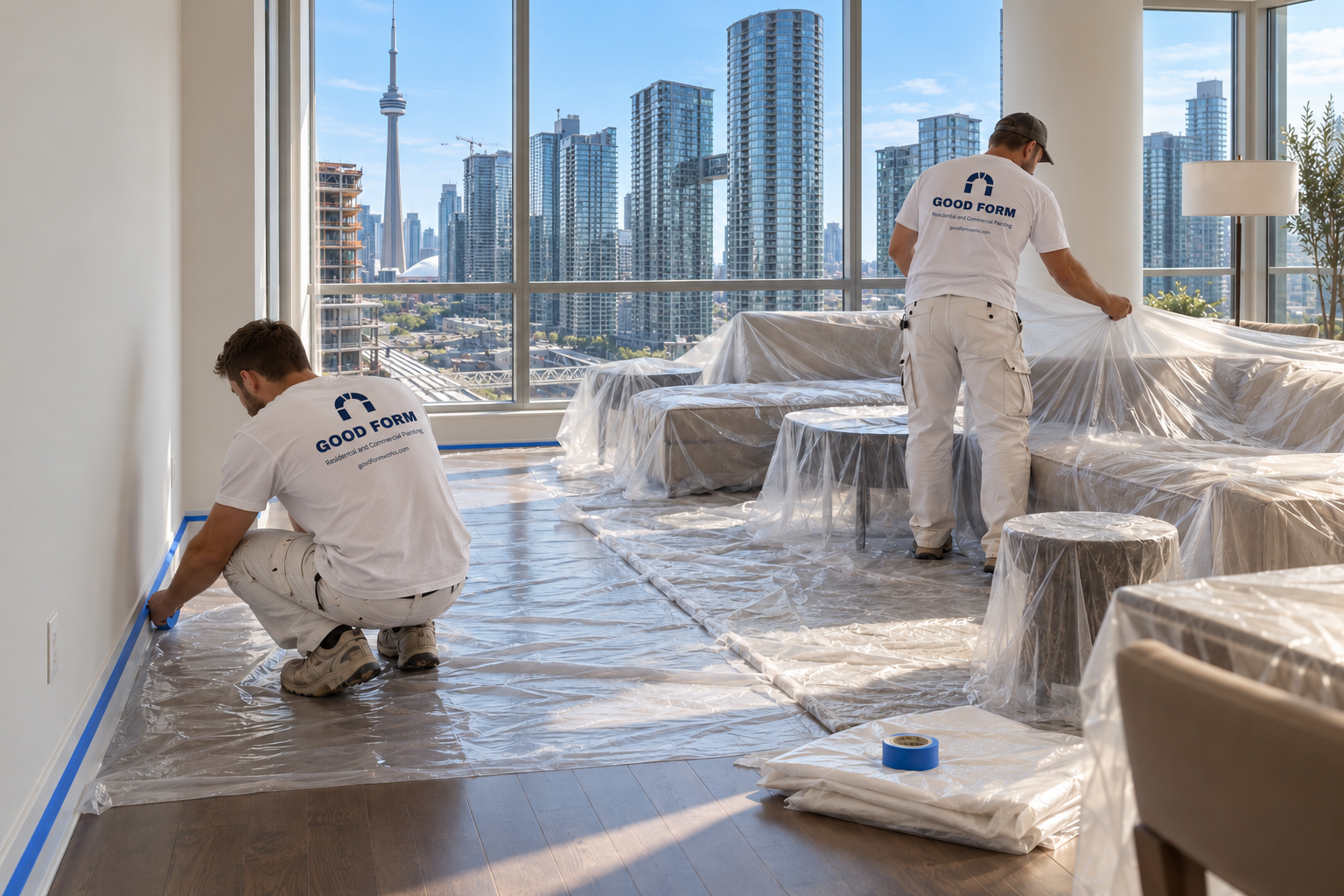
Planning interior painting in Toronto? Use this guide to define your scope, compare estimates and prepare a home or condo for the work. Start with the decisions that affect the project, then use the checklist and enquiry brief to keep everyone informed.
In this guide
- 1. Start with what you want to change
- 2. Make a room-by-room painting scope
- 3. Photograph the space and flag surface concerns
- 4. Test paint colours in the room
- 5. What should a painting estimate include?
- 6. Plan access, furniture and daily routines
- 7. Planning a painting project in a Toronto condo
- 8. How long does interior painting take?
- 9. Home painting project checklist
- 10. Copy this brief when requesting a painting estimate
- Painting project planning questions
1. Start with what you want to change
A successful painting project starts with a clear brief: what you want painted, what the surfaces need and how the work will fit around your space. You do not need every colour selected before you speak to a painter. You do need a useful starting point.
Perhaps you want to refresh a condo before moving in, repaint busy hallways or bring adjoining rooms together. Write down the main goal, then separate essential work from optional additions. That makes it easier to compare scopes and decide where to spend.
A useful starting brief: “We’re moving into a two-bedroom Toronto condo and would like the bedroom and living-room walls painted before furniture arrives. Ceilings and doors are optional. We can share access details and photos.” This describes a project without guessing at a price or promising a completion date.
2. Make a room-by-room painting scope
Room count alone does not describe the work. A room with tall ceilings, several doors and detailed trim can involve more painting than a larger room with simple walls. Make a short list for each space.
- Walls: which rooms, feature walls or adjoining areas are included?
- Ceilings: include them explicitly if they need attention.
- Doors and trim: count doors and note frames, baseboards and other details.
- Cabinets: identify these separately because preparation and finishing differ from walls.
- Areas staying as they are: list anything that must remain untouched.
Approximate dimensions and ceiling heights are useful for the first conversation. A painter may still need to measure or inspect before confirming the scope. See our interior painting service for walls, ceilings and finishing details, or our trim and door painting page for a focused refresh.
3. Photograph the space and flag surface concerns
Take one wide photo from the doorway of each room, then another from the opposite side. Add close-ups of cracks, peeling, stains, damaged corners and previous repairs. Include doors and trim if they are part of the work.
Use ordinary room lighting and keep the photographs clear. Tell the painter what you know about earlier coatings or recurring problems. A photo can start the assessment, but it may not reveal everything affecting preparation.
Ask which filling, sanding, cleaning or priming is included, and how additional preparation would be handled if the condition differs from what was expected. A stain or recurring patch should be assessed before it is treated as a simple colour change.
4. Test paint colours in the room
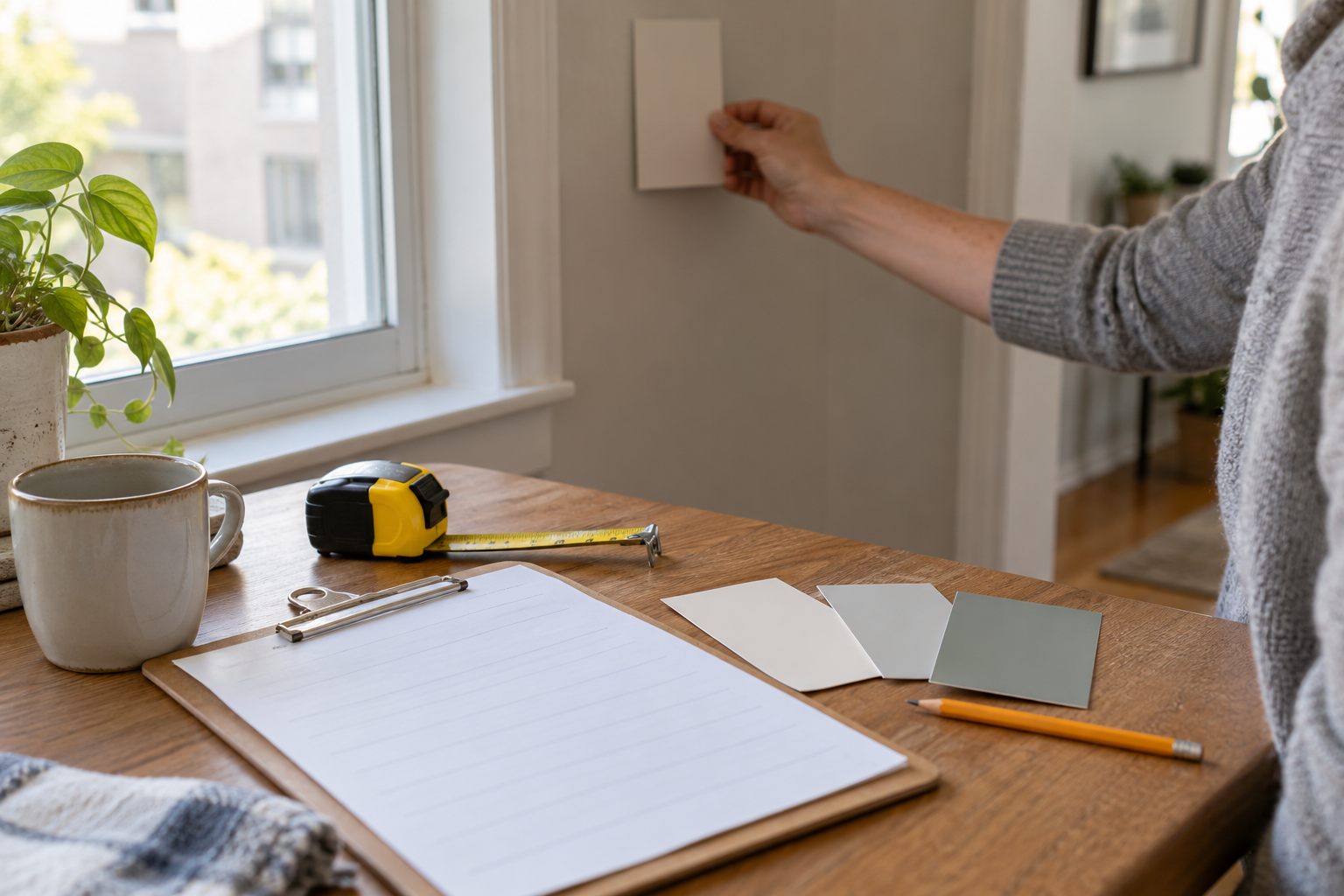
Choose colours alongside the flooring, furniture, cabinets and finishes that will remain. Start with a small shortlist and look at samples on different walls during the day and under the lighting you use in the evening.
A movable sample board can help you compare the same colour in different parts of a room. Benjamin Moore’s paint-sample guidance explains how to use samples in changing light. A screen image or small colour chip is a starting point, rather than the final test.
Confirm the colour name or code, product and finish for each surface before work begins. Ask how your chosen finish suits the room’s use, appearance and cleaning needs. If you have not chosen yet, say so when requesting an estimate and agree when the decision is needed.
5. What should a painting estimate include?
Compare the work described before comparing the total. A lower figure can cover fewer surfaces, less preparation or a different coating specification. Ask for unclear items to be explained in writing.
- The rooms and surfaces included, with optional work shown separately.
- The preparation allowed for and any exclusions or unresolved conditions.
- The agreed paint or coating specification, including colours and finishes when selected.
- Who supplies materials, moves furniture and protects the surrounding space.
- Working arrangements, access, scheduling assumptions and cleanup.
- Price, tax treatment, payment terms and how changes are approved.
An estimate helps you plan; the final agreed quote or contract should describe what you are purchasing. Keep revised scopes and approvals together. If you add ceilings, change colours or extend the work to another room, confirm any effect on price and timing before proceeding.
For budget discussions, explain what matters most and which items are optional. Good Form’s estimate starts with your space and the work it needs. Cabinet projects should be considered separately; explore cabinet painting if they are part of your plans.
6. Plan access, furniture and daily routines
Before the start date, agree what must be cleared, what needs to move and who will handle it. Do not assume furniture moving or removing wall-mounted items is automatically included. Discuss heavy, delicate or fixed items individually.
Identify rooms you need for sleeping, working or everyday access. Tell the painter about pets, children, work calls and any areas that must remain accessible. The sequence may depend on the rooms, preparation, products and practical working arrangements.
- Clear personal belongings and fragile items as agreed.
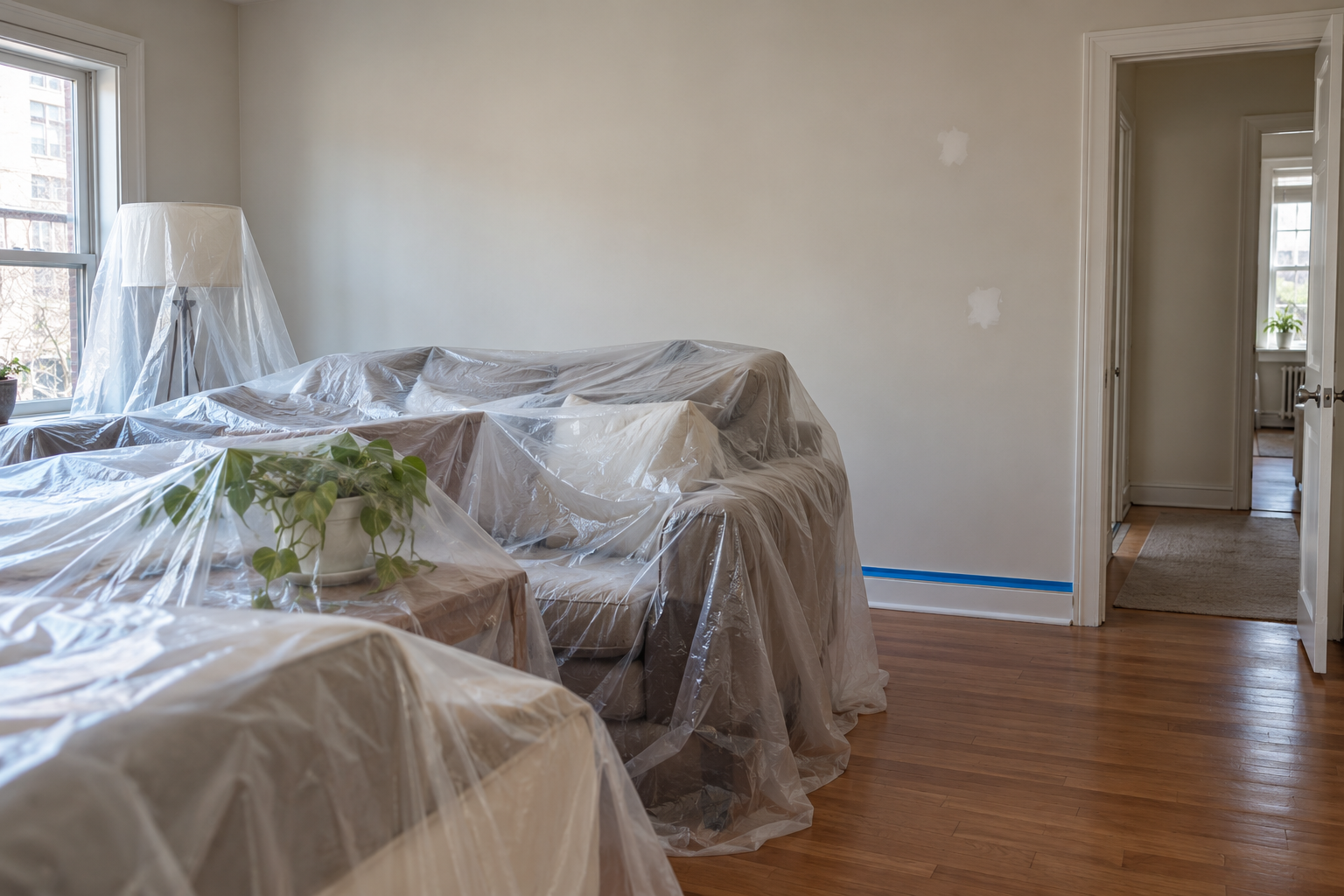
- Confirm how floors, furniture and adjacent surfaces will be protected.
- Arrange access, parking or loading where relevant.
- Agree where tools and materials can be kept.
- Identify the person who can answer scope or colour questions during the work.
7. Planning a painting project in a Toronto condo
For a condo or apartment, check building arrangements before settling the schedule. Requirements vary, so ask your property manager or building contact what applies to the work you are planning.
- Are there permitted contractor working hours?
- Does the service elevator need to be booked, and who books it?
- What loading, parking and contractor-entry arrangements apply?
- Does management require documents from the contractor before access?
- Are there protection or cleanup requirements for common areas?
- Do any doors, exterior-facing surfaces or shared areas need separate approval?
Share the answers with the painter early. A preferred start date is not the same as confirmed access. If you are painting before moving in, coordinate possession, keys, any other trades and furniture delivery rather than assuming each will happen on the same day.
8. How long does interior painting take?
There is no reliable one-size-fits-all answer from room count alone. Surface condition, included areas, ceiling height, coatings, crew arrangements and access can all change the schedule. Ask for a sequence based on your actual scope.
Separate active work time from the time before a surface can be recoated, used normally or cleaned. Paint that feels dry may still be curing. Follow the selected product’s instructions and ask your painter for the relevant care guidance. Sherwin-Williams explains the distinction in its drying and curing guidance.
Work backwards from the date that matters to you: moving day, a property listing or reopening a room. Discuss what needs to be finished by then and whether the proposed sequence is workable. Leave room in the plan for decisions, preparation and agreed product requirements.
9. Home painting project checklist
For homeowners and condo owners preparing to hire a painter. Work through each stage—you do not need every answer before requesting an estimate.
Before requesting an estimate
- List rooms and surfaces to paint, including anything to leave unchanged.
- Separate must-have work from optional extras.
- Take room photos and close-ups of cracks, peeling paint or stains.
- Note preferred dates, move-in deadlines and rooms you need to keep using.
Before booking your painter
- Check the written estimate covers preparation, repairs, paint and cleanup, and clearly lists anything not included.
- Confirm the price, taxes, payment terms and how extra work is approved.
- Agree who moves furniture, removes wall items and protects belongings.
- For condos, check work hours, elevator bookings and contractor requirements.
Before painting starts
- Confirm colours, products and finishes with your painter by the agreed date.
- Clear personal items and prepare the rooms as agreed.
- Arrange entry, parking and a plan for pets and daily routines.
- Confirm the start date, order of rooms and your main contact.
Before wrapping up
- Review the finished work together and record any outstanding items.
- Confirm cleanup and where labelled leftover paint will be stored.
- Ask when to move furniture back, clean painted surfaces and resume normal use.
Download the one-page Home Painting Project Checklist (PDF) →
Want space to plan the details?
The separate three-page Painting Project Planner has space for 10 rooms or areas, paint choices, preparation arrangements and notes. Fill it in on screen or print it. Complete the technical paint sections with your painter; leave undecided details blank.
Download the fillable Painting Project Planner (PDF, 3 pages) →
10. Copy this brief when requesting a painting estimate
Copy the following into an email or enquiry form. Fill in what you know; mark undecided items for discussion. Send only the information needed for your estimate.
Project area or postal code:
Home, condo or business:
Rooms and approximate dimensions:
Walls, ceilings, doors and trim to include:
Surfaces to leave unchanged:
Condition concerns and previous repairs:
Colours and finishes chosen or undecided:
Occupied or vacant during the work:
Furniture and access arrangements:
Building requirements, if applicable:
Preferred timing and important dates:
Essential work and optional additions:
Photos attached:
Questions to discuss:
A clear brief makes the first conversation more useful. Good Form serves Toronto and surrounding areas; check our service areas and request an estimate when you are ready.
Painting project planning questions
Should I paint before moving in?
An empty space can simplify access and furniture protection, but the right sequence depends on possession, other work and the proposed coatings. Share your move-in and delivery dates before agreeing the painting schedule.
Can I request an estimate before choosing paint colours?
Yes. Explain the kind of change you want and identify undecided colours. A significant colour change or different finish can affect the work, so agree how those decisions will be confirmed.
How do I prepare a room for professional painters?
Ask for a project-specific preparation list. Agree what personal items to clear, what furniture needs moving, who handles it and how remaining surfaces will be protected. Share access restrictions before the start date.
Can I stay in my home while it is painted?
Discuss the rooms you need to use, daily access and the planned products with your painter. Occupied-space arrangements depend on the project; do not assume every room will remain available throughout the work.
How much does a painting project cost?
Cost depends on the surfaces, dimensions, condition, preparation, coatings and working arrangements. Start with a defined scope and compare equivalent work. A general room count or online price cannot establish the final cost of your project.
What if the scope changes after I receive the estimate?
Describe the change and ask for its effect on price, materials and timing before it is carried out. Keep the updated scope and your approval with the project records.
Ready to bring Good Form into your space?
Tell us about your space, location and ideal timing.